
If you work in maritime logistics, you’ve probably encountered LNG in two very practical contexts: as a cargo moving through dedicated terminals and as a marine fuel supplied during port calls. So, what is LNG gas in operational terms? LNG (liquefied natural gas) is natural gas (primarily methane) that has been cooled into a cryogenic liquid so it can be stored and transported efficiently. This physical change is the real game-changer for shipping: the same energy can be moved at scale by sea, enabling global supply chains and, increasingly, supporting emissions strategies for certain vessel segments.
This article keeps the technical level clear and useful: how LNG is produced, what it looks like, how it’s used in ports and bunkering, and what professionals should pay attention to when LNG becomes part of the call plan. Where helpful, we include key technical data (temperature, composition, boil-off behavior) and practical examples from port operations.
What does LNG stand for and how is it produced?
LNG stands for Liquefied Natural Gas. It is not a different fuel from natural gas; it is the same product in a different physical state. Liquefaction is what makes long-distance, high-volume transport viable beyond pipelines, either as cargo on LNG carriers or as fuel delivered to LNG-fuelled ships.
Natural gas extraction and liquefaction
Natural gas is produced from onshore or offshore fields and then treated to remove water, CO₂, sulfur compounds, and heavier hydrocarbons. This conditioning stage matters because cryogenic systems are sensitive: moisture and certain impurities can freeze, block lines, or affect the stability of the process.
After treatment, gas is liquefied in industrial plants using refrigeration cycles. Liquefaction reduces the volume dramatically (often described as around 600 times compared to the gaseous state at ambient conditions). For maritime trade, that volume reduction is the basis of LNG’s economic logic: it enables ocean transport from exporting regions to importing terminals, and it makes shipboard storage feasible for vessels that would otherwise need large, high-pressure tanks.
LNG temperature and composition
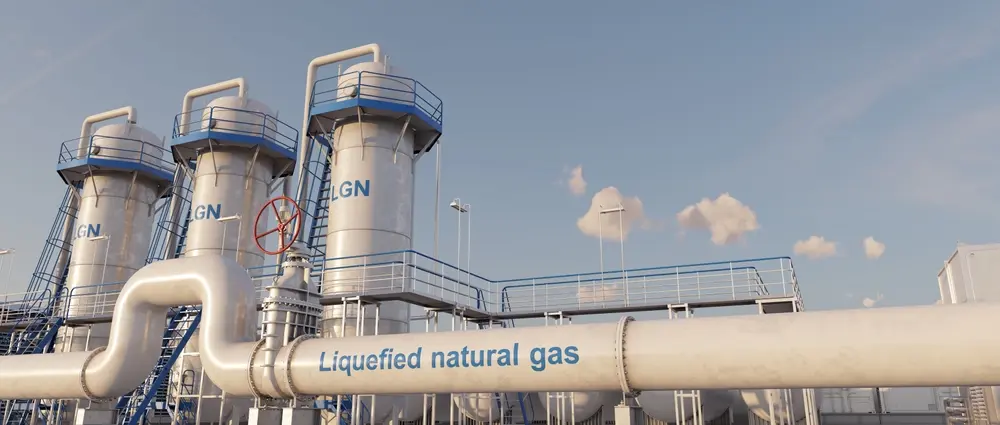
LNG is typically stored and handled at approximately -162°C (variations occur depending on composition and pressure). It is usually methane-dominant, with smaller proportions of ethane, propane, nitrogen, and trace components depending on the source gas and processing.
From a ship and port perspective, composition influences three operational themes:
- Combustion quality and engine behavior (e.g., methane number and knock resistance in certain engine types)
- Energy content (heating value affects consumption and endurance planning)
- Boil-off characteristics (how readily vapour is generated during storage and transfer)
What does liquefied natural gas look like?
LNG is a clear, colourless liquid, visually similar to water. It is not corrosive and not toxic in itself, but it is cryogenic and will vaporise rapidly if released. The practical hazard is therefore not “liquid toxicity” but the combination of extreme cold (cold burns, brittle fracture risk in unsuitable materials), rapid vapour generation, and the potential formation of a flammable gas-air mixture once the vapour warms and disperses within certain concentration ranges.
What is LNG used for?
LNG is used where the ability to move natural gas economically matters, either across oceans as cargo or within port ecosystems as a marine fuel. In short, what is LNG gas used for in maritime terms? Primarily, it supports energy supply chains and vessel propulsion in specific fleets and routes.
Maritime transport and bunkering
As a marine fuel, LNG is used on LNG-fuelled vessels (dual-fuel or gas-only) and is common in segments where emissions compliance and local air quality are operational priorities, ferries, short-sea shipping, cruise, and growing parts of the container and tanker markets.
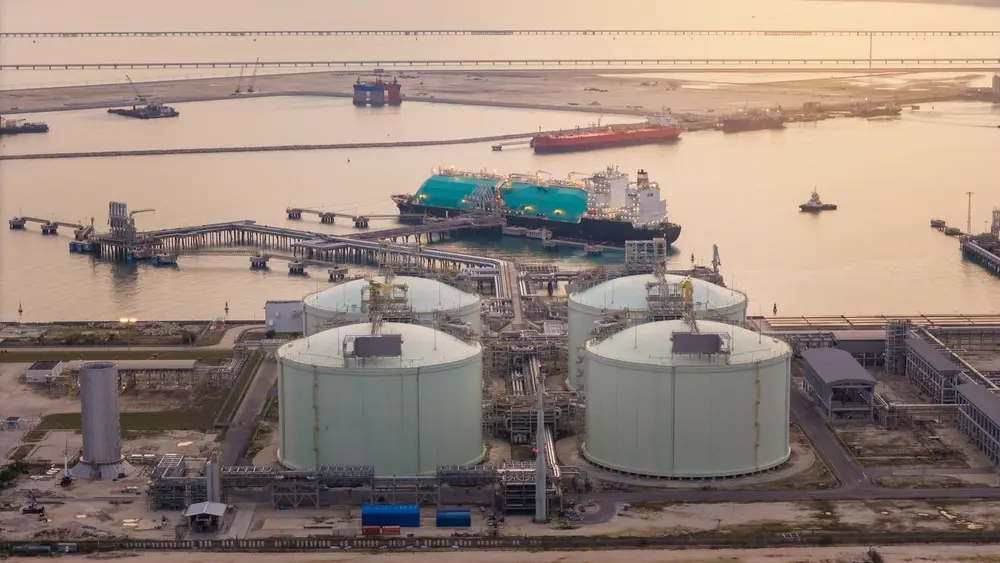
Operationally, LNG bunkering resembles conventional bunkering in project discipline (planning, checklists, communication, custody transfer) yet the technical layer is very different. Cryogenic transfer requires cool-down sequences, controlled rates, gas monitoring, safety zones, and emergency shutdown integration between ship and shore. Ports supporting LNG bunkering typically manage these operations either at dedicated berths, via truck-to-ship for smaller quantities, or via ship-to-ship transfer using LNG bunker vessels.
Industrial and commercial applications
Beyond marine fuel, LNG is widely used to supply gas to regions without pipeline connectivity, to balance seasonal demand, and to feed industrial consumers such as power generation and process industries. For maritime stakeholders, these uses translate into predictable cargo flows: LNG carriers calling at regasification terminals, scheduled berthing windows, and strict terminal interface requirements that resemble other high-consequence cargo operations.
LNG vs CNG and LPG
These products are often conflated in day-to-day conversations, but the differences are operationally important:
- LNG is natural gas cooled into a cryogenic liquid for high-volume storage and long-distance transport.
- CNG is natural gas stored as a gas under high pressure; it is typically less suited to intercontinental shipping because of storage efficiency.
- LPG (propane/butane mixes) is a different hydrocarbon product family, liquefied under moderate pressure at ambient temperature, with different tank design and handling norms.
Advantages and challenges of LNG
LNG is often adopted for a blend of compliance, operational, and commercial reasons. Yet it is not “plug-and-play.” Its benefits come with system complexity, especially at the port interface.
Is LNG a clean energy source?
LNG generally reduces SOx and particulate emissions compared with heavy fuel oil and can reduce NOx under certain engine technologies. CO₂ reductions versus conventional marine fuels can be achieved, but results vary by engine type and operating profile. A key consideration for climate impact is methane slip—unburned methane released during combustion or handling. Because methane has a high short-term warming potential, controlling slip is central to the environmental case for LNG. This is why many operators treat LNG as part of a broader decarbonization pathway rather than the final destination.
Storage, safety, and transportation
LNG requires cryogenic containment and a disciplined approach to safety management. For ports and ships, the operational implications typically show up in procedural intensity: more detailed risk assessments, training requirements, equipment compatibility checks, and stricter constraints on simultaneous operations. The upside is that, when executed properly, LNG operations can be highly predictable, precisely because they are engineered around well-defined procedures.
Environmental considerations
From a port perspective, LNG can improve local air quality, which is particularly relevant for ports near urban areas. But environmental performance is shaped by the full value chain: upstream production and processing, liquefaction energy demand, shipping boil-off management, and onboard engine performance. As ESG reporting becomes more granular, stakeholders increasingly evaluate not just the fuel choice but the measurable operational controls used to manage emissions and losses.
LNG vs natural gas: Key differences
Because LNG is still natural gas, the difference is not chemical, it is logistical. The shift from gas to cryogenic liquid changes infrastructure needs, cost structure, and operating procedures.
Physical state, infrastructure, and cost
Pipeline gas moves as a gas in transmission networks. LNG requires liquefaction plants, cryogenic storage, LNG carriers or bunker vessels, and (for importing markets) regasification terminals. This adds capital and energy costs, but it unlocks routes and markets that pipelines cannot reach. In shipping, that translates to global flexibility: LNG cargoes can be redirected, and bunkering supply chains can be developed in ports with sufficient demand and infrastructure.
Use cases and efficiency
Pipeline gas tends to be most efficient where fixed infrastructure exists and demand is stable. LNG excels where you need intercontinental transport, diversification of supply, or mobile fuel logistics for vessels. In maritime contexts, “efficiency” also includes schedule reliability, port turnaround, and the ability to meet emissions requirements without operational disruption.
LNG in maritime logistics
When LNG enters the maritime equation, it affects not only engineering but also port call planning, documentation flows, and stakeholder coordination. For many operators, the practical question behind what is LNG gas becomes: how do we integrate it safely and efficiently into everyday port operations? That is where the local coordination role becomes critical, and where a competent shipping agent adds operational value by aligning ship, terminal, suppliers, and authorities.
Why LNG matters for port operations
Ports handling LNG (either as cargo or as fuel) operate under tighter interdependencies than conventional calls. The difference is not just equipment; it’s sequencing, permissions, and interface control. In practice, LNG calls often require coordination across:
- berth and safety zone planning (including exclusion areas and traffic control)
- terminal readiness, competence assurance, and ship/shore safety alignment
- documentation, declarations, and inspection scheduling integrated with the cargo/fuel plan
- emergency response integration with port services and local authorities
Ship-to-ship transfer and bunkering trends
Ship-to-ship (STS) LNG bunkering is expanding where traffic density and demand justify dedicated LNG bunker vessels. STS can reduce berth occupation time and increase flexibility, but it requires mature operating procedures: robust checklists, clear communications protocols, ESD testing, metering confidence, and defined weather/sea-state criteria.
As ports develop these capabilities, LNG becomes less of a “special project” and more a standardised service line within the port ecosystem. For operators, the advantage is predictability, provided the call is managed with the same discipline as other high-consequence marine operations. When LNG bunkering is part of the plan, Ibérica Marítima can coordinate stakeholders and timings in line with port constraints and safety requirements, supporting LNG bunkering solutions during complex port calls.
LNG’s role in decarbonizing shipping
LNG is often positioned as a transitional fuel that helps meet regulatory requirements and improve local emissions performance while other solutions scale (bio-LNG, synthetic methane, hydrogen derivatives, ammonia, shore power, and efficiency measures). Operationally, LNG’s role depends on route profile, fuel availability across ports, vessel technology, and how well methane slip and supply-chain emissions are managed. For many shipping companies, LNG is less about a single “fuel decision” and more about building a workable compliance pathway without compromising service reliability.
The future of LNG in shipping
So, what is LNG gas in the maritime sector? It is natural gas made logistically viable at global scale—both as a traded cargo and as a marine fuel that reshapes port operations and ship design. LNG can deliver real operational and local air-quality benefits, but it also demands higher technical discipline, specialised infrastructure, and careful environmental management.